
The Front Row Index: Inflation, Scarcity, and the Second Life of Deftones
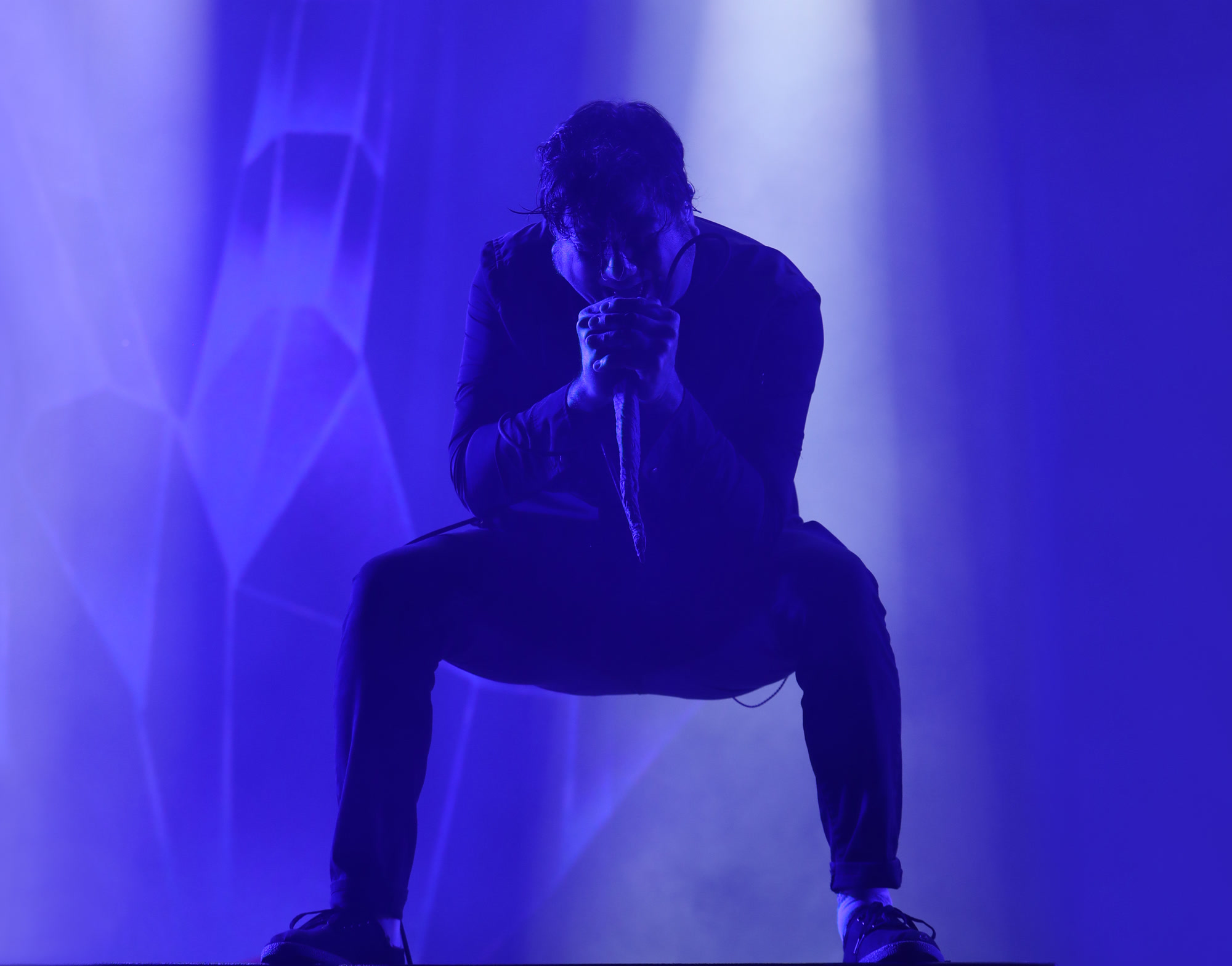

The first sign came through a closed door. Walking past the bedroom of my daughter Charlee, newly sixteen, I heard Deftones, loud enough to recognize from the hallway. I was excited before I was anything else. She had found a band, and I assumed she was about to step into the world I grew up in: frequent local shows, small rooms, and a band that sounded like no one else.
I was nearly 16 myself, a teenager in Mesa, Arizona, when Around the Fur came out on October 28, 1997, and that record is where I came in. For the next few years I went to as many shows as a pizza-shop paycheck allowed. So I went to buy us tickets for the 2027 tour, and the Hollywood Bowl stopped me cold: box and front sections listed on the resale market at roughly $500 to more than $1,000 a seat, and the pool circle near the stage at nearly $2,000.
My first reaction was the reflex of every parent who remembers a cheaper world: this is just inflation, and I am just old. The numbers turned out to be more interesting than that. Charlee is the same age I was when I found this band, but she has not found the band I found, and she is not walking into the world I walked into. She has discovered a new band, in a new world.
The inflation baseline
The fairest starting point is a real ticket from the same band in the same era, and the record offers two. On December 5, 1997, five weeks after Around the Fur was released, Deftones played Clutch Cargo's, a club in Pontiac, Michigan, with Limp Bizkit; a ticket was $13. Three years later, on November 28, 2000, during the White Pony cycle, they headlined the Knoxville Civic Coliseum with Incubus and Taproot for $27.50. Neither is an Arizona show, and I was at neither, but together they bracket my own years with the band: a club act in 1997, an arena act by 2000.
| Inflation baseline | 1997 (club) | 2000 (arena) |
|---|---|---|
| Ticket | $13.00, Clutch Cargo's, Pontiac MI | $27.50, Knoxville Civic Coliseum |
| CPI-U, annual average | 160.5 | 172.2 |
| CPI-U, October 2026 | 337.5 | 337.5 |
| Cumulative inflation | 337.5 / 160.5 = 2.10, or ~110% | 337.5 / 172.2 = 1.96, or ~96% |
| Ticket in today's dollars | $13 × 2.10 = ~$27 | $27.50 × 1.96 = ~$54 |
Inflation explains the floor, not the ceiling
Deftones 2027 tour pricing as listed Nov 24, 2026. Multiples vs the 2000 arena ticket ($54 today). Where a bar is two tones, the pale part runs from zero to the low price and the solid part is the range. Hover or tap for the exact figure.
The arena ticket is the fairer comparison, since Deftones now play arenas and amphitheaters. Fifty-four dollars is the number inflation is entitled to. Anything above it has to be explained by something else.
What inflation explains, and what it doesn't
| 2027 tour pricing (listed Nov 24, 2026) | Price | Multiple of $54 baseline |
|---|---|---|
| Cheapest seat, median across 20 tour dates (resale, incl. fees) | $82.50 (range $52-$181) | $82.50 / $54 = 1.5× |
| Hollywood Bowl, Ticketmaster face value | $59.50-$299.50 (median $105) | 1.1× to 5.6× |
| Resale median seat, Forest Hills / Phoenix / San Antonio | $165 / $231 / $271 | 3.1× to 5.0× |
| Hollywood Bowl, box and front sections (cheapest listing per section) | $503-$1,250 | 9.3× to 23.2× |
| Hollywood Bowl, pool circle (cheapest listing) | $1,821-$2,089 | 33.8× to 38.8× |
The table tells a story that a single average would hide. The cheapest seat has roughly kept pace with prices in general; a fan willing to sit far back pays about one and a half times an inflation-adjusted 2000 ticket. Even the box office's own face values stay within a few multiples. The distortion lives in the upper part of the house and on the secondary market, where the typical seat runs three to five times the baseline and the seats nearest the stage run ten to nearly forty times. Inflation accounts for the floor. It does not account for the ceiling.
Wages make the point more sharply, because what a ticket costs is ultimately measured in hours of work.
A ticket, measured in a week's pay
Ticket price as a share of U.S. median weekly earnings (full-time workers). 100% = one week. Hover or tap for the exact figure.
| Share of a week's pay | 1997 and 2000 | Today |
|---|---|---|
| Median weekly earnings | 1997: $503; 2000: $576 | Q3 2026: $1,232 |
| Typical ticket | 1997 club $13 = 2.6%; 2000 arena $27.50 = 4.8% | Cheapest seat $82.50 = 6.7% |
| Resale median $231 = 18.8% | ||
| Bowl box or front section $600 = 48.7% | ||
| Bowl pool circle $1,821 = 1.5 weeks |
In 1997 a Deftones club ticket cost about one fortieth of a median week, and in 2000 an arena ticket about one twentieth. Today the back of the room costs only slightly more of a week. The middle of the market costs a fifth of a week, and the front costs half a week to a week and a half. The concert did not get uniformly more expensive. It was stratified.
How the business changed
Concert prices outran the CPI
Nominal dollars. Grey lines show what tickets would cost if they had only kept pace with inflation. Hover or tap the chart for any month.
| Pollstar Top 100 | 1996 avg, CPI only | 1997 club ticket, CPI only | |
|---|---|---|---|
| 1996 | $25.81 | $25.83 (July) | |
| 2008 | $67.33 | $36.20 | $17.73 |
| 2009 | $62.57 | $35.44 | $17.36 |
| 2010 | $61.74 | $35.87 | $17.57 |
| 2023 | $135.88 | $50.30 | $24.64 |
| 2024 | $136.45 | $51.76 | $25.35 |
| 2025 | $134.23 | $53.16 | $26.04 |
| October 2026 | $55.54 | $27.20 | |
| Deftones 2027, listed Nov 2026 | Cheapest seat $82.50; Phoenix resale median $231 | ||
The trend is not unique to one band. Pollstar has tracked the average ticket for North America's top 100 tours since 1996, when it was $25.81. Had it merely followed the CPI, it would be about $55 today. It was $134.23 in 2025.
| Industry indicator | Figure |
|---|---|
| Top 100 tours worldwide, 2025 | $8.9B gross, 67.3M tickets |
| Record worldwide gross (2024) / record tickets (2023) | $9.5B / 70.4M |
| Average tickets per show, top 100, 2025 | 19,104 (all-time record) |
| Live Nation, 2025 | 159M fans at 55,000+ events |
| Ticketmaster, 2025 | 646M tickets distributed |
| Gen Z monthly live music spend (Luminate, Q2 2024) | $38, highest of any generation, 23% above average |
| Gen Z willing to pay premium resale prices (Cash App / Harris Poll, 2025) | 75% |
The first force is concentration. When one company's events draw 159 million people a year, pricing stops being a guess and becomes an optimization problem. Dynamic pricing, platinum tiers, and VIP bundles are tools for discovering exactly what the most motivated buyer will pay, and then charging it. In 2000 the price of a seat was printed on the stub and left alone; the gap between what a ticket cost and what a fan would have paid was simply kept by the fan. The modern system is designed to close that gap, and the front of the house is where it closes most completely.
The second force is who the buyers are. Gen Z now outspends every other generation on live music, and three quarters of them say they would pay premium resale prices to get in. For a generation that rents its music by the month and owns almost none of it, the live show has become the scarce, ownable experience: the thing that cannot be streamed.
The third force is structural. The market has split by room size.
Two markets under one roof
Average ticket price by venue capacity, Pollstar boxoffice, Nov 14 2024 to Aug 13 2025. Hover or tap for the exact figure.
| Venue capacity (Pollstar, Nov 2024 to Aug 2025) | Average ticket | Multiple of $54 |
|---|---|---|
| 751-1,500 (clubs) | ~$44 | 0.8× |
| 1,501-2,500 (theaters) | $67.48 | 1.3× |
| 5,001-10,000 (sheds, large theaters) | $107.67 | 2.0× |
| 15,001-30,000 (arenas, amphitheaters) | $129.07 | 2.4× |
| 30,000+ (stadiums) | $234.96 | 4.4× |
The club sells proximity to music. The arena sells proximity to an event, with the social proof and the sense of having been there that come with it. The small room still prices like the world I grew up in. The catch, for anyone hoping to see Deftones the old way, is that they no longer play clubs on headline runs. Their audience has outgrown the tier where the old economics survive.
Even within the 2027 tour, the spread is wide. The 24-show run is built mostly around amphitheaters; the exceptions are the Hollywood Bowl, Forest Hills Stadium, and San Antonio's Frost Bank Center, an indoor arena.
| 2027 tour stop | Venue type | Face value (Ticketmaster) | Cheapest resale | Resale median | Resale high |
|---|---|---|---|---|---|
| Hollywood Bowl, Los Angeles, May 18-19 | Bowl (~17,500) | $59.50-$299.50 | $84-$99 | n/a | pool circle from ~$1,821 |
| Frost Bank Center, San Antonio, May 6 | Indoor arena | $45.50-$145.50 | $163 | $271 | $3,688 |
| Talking Stick Resort Amphitheatre, Phoenix, May 12 | Amphitheater | $28.50-$168.50 | $97 | $231 | $1,949 |
| Forest Hills Stadium, New York, June 17-18 | Open-air stadium | n/a | $103-$115 | $165 | $1,130 |
San Antonio, the one indoor arena, is the most expensive door to walk through. Phoenix has the lowest face values on the chart, closest to the scale I remember from Arizona, yet its resale market still stretches to nearly $2,000.
Not just inflation, not just pricing: how Deftones changed
So far this is a story of two forces. One is inflation. The other is a newer world of dynamic pricing and optimization, built to find what the most motivated fan will pay and how they'll pay it. Both would describe any major act. What makes Deftones different is the band itself, because the demand behind these prices is substantially new.
| Deftones resurgence | Figure |
|---|---|
| Spotify monthly listeners, mid-2020 (before Ohms) | 2.3M |
| Spotify monthly listeners, Nov 2026 | 19.3M (8.5×) |
| Share of recent crowds who are new late-teen / early-20s fans | >50% (CAA agent estimate) |
| 2025 Pollstar worldwide rank | #66 |
| 2025 gross and tickets | $44.6M, 481,630 tickets, 40 shows |
| Per night | ~12,000 tickets, ~$1.1M |
| Implied average ticket | $44.6M / 481,630 = ~$93 |
| 2025 North American arena run | 100% sold out, incl. Madison Square Garden, TD Garden, two nights at Kia Forum |
| Golden Gate Park with System of a Down, Aug 17, 2024 | 50,186 tickets, $9.6M ($191 per head) |
A second curve
Spotify monthly listeners indexed to each band's 2019 average. Dotted: no archived data between. Vertical lines mark Ohms (September 2020) and "Cherry Waves" on TikTok (2022). Hover or tap for the exact count.
Every archived snapshot and the 24 November 2026 count, indexed to that band's 2019 average. The smaller number is monthly listeners.
The engine is not a reunion, a new member, a biopic, or a marketing campaign. Around 2022, "Cherry Waves," a deep cut from 2006's Saturday Night Wrist, became a TikTok phenomenon, followed by "Sextape" and a run of older songs. Louder reported that the #deftones hashtag drew eight billion views from January 2022 onward. CAA agent Jared Martin told Pollstar that more than half of a typical recent audience were newer fans in their late teens and early twenties, an estimate rather than a census, but consistent with the streaming curve. Chino Moreno has described the growth as unsolicited, and suggests that is part of why it reads as genuine.
The result is a rare arc: a band reaching its commercial peak three decades after its debut, not by reviving its old audience but by recruiting a new one that was not born when White Pony came out.
One discrepancy deserves attention. The 2025 box office implies an average of about $93 per seat, while today's resale medians run $165 to $271. The first is what tickets were issued for; the second is what the market will bear once demand outruns supply. The gap between them is, in a sense, the subject of this essay.
There is also a domestic detail I find more persuasive than any chart. Drummer Abe Cunningham told Kerrang! that the band now meets parents and teenagers together, and hears both answers to who introduced whom. The resurgence is not only generational replacement. In some households it is generational overlap.
How rare is a second rise?
Deftones grew faster than their peers
Spotify monthly listeners, mid-2020 (before Ohms) to Nov 2026, growth multiple. Grey: viral-revival references. Hover or tap for the exact counts.
A crude but honest test is to compare Spotify audiences before and after. Spotify itself grew enormously in these years, so every band's number rose; the question is by how much. Deftones grew roughly 8.5 times. Linkin Park, System of a Down, Korn, Muse, Slipknot, and Incubus grew between 2.2 and 3.1 times. The only comparable multiple belongs to Kate Bush, whose single song reached a new audience through Stranger Things.
| Act | Trigger | Scale of revival | Touring phenomenon? |
|---|---|---|---|
| Kate Bush, "Running Up That Hill" (2022) | Stranger Things season 4 | UK #1 for three weeks, 37 years after release; US Hot 100 #3 | No; one song |
| Fleetwood Mac, "Dreams" (2020) | Viral TikTok skateboarding video | Hot 100 re-entry, peak #12; catalog streams roughly doubled | No; a streaming spike |
| Linkin Park (2024-2026) | Reunion, new vocalist, new album | From Zero tour: $251M, 2.2M tickets, 80 shows | Yes, driven by a reunion |
| Deftones (2022-present) | Organic TikTok discovery of deep cuts | Spotify 2.3M to 19.3M; sold-out arenas; Pollstar #66 | Yes, with no precipitating event |
Kate Bush and Fleetwood Mac show that a single song can leap generations, but those revivals lived on charts and dashboards; they did not fill arenas with sixteen-year-olds. Linkin Park did fill stadiums, but with a clear narrative event behind it. Deftones combine the organic, catalog-driven discovery of the first two with the box-office conversion of the third, and without a catalyst. That is not proof that nothing like it has happened before, but it is a much narrower category than "old band gets popular again."
Why this band? Stereogum noted that the songs resonating with young listeners are the band's most shoegaze-adjacent ones, arriving just as a shoegaze revival took hold on the same platform. PopMatters observed that algorithmic feeds flatten time, placing a 2006 deep cut beside this week's releases. And Moreno has said the band worked deliberately, even during the nu metal boom, to avoid sounding tied to a moment. Music built to resist dating turns out to suit an environment that ignores dates entirely.
The Muse problem
The clearest counterfactual is Muse. If you had asked me which band from that era would have the more durable mainstream presence, I would have said Muse without hesitation: stadium-scale ambition, broader name recognition, a more obviously global footprint.
| Deftones | Muse | |
|---|---|---|
| Spotify monthly listeners, mid-2020 | 2.3M | 8.4M |
| Spotify monthly listeners, Nov 2026 | 19.3M | 22.0M |
| Growth since 2020 | 8.5× | 2.6× |
| 2025 Pollstar worldwide top 100 | #66 | Not ranked (between album cycles) |
| Current cycle | private music (Aug 2025); 2027 North American amphitheater run | The Wow! Signal (June 2026); North American tour summer 2026, UK and European arenas Nov-Dec 2026 |
| Hollywood Bowl | May 18-19, 2027 | Aug 31, 2026 |
| Cultural position | Historically niche, now a Gen Z moment | Household, steady, lower momentum |
Muse has not declined; it has persisted. It still has the larger streaming audience, a deeper international base, and a catalog that never went out of circulation. What it lacks is a second curve. Its audience grew up with it, while Deftones' audience was replaced and multiplied, closing a gap of nearly four to one in 2020 to almost even today. In network terms, Muse kept its connections, and Deftones acquired a new graph.
A new world
Charlee is the age I was in 1997, and the name on her speaker is the same one that was on mine. It is not the same band. To her, Deftones are simply current, as present as anything in her feed, and the price of seeing them is the price of something she values. I grew up in an economy where the show was the cheap part and the record was the investment. She is growing up in the inverse, where the music is nearly free and the room is the luxury.
On Wednesday, May 19, 2027, I am taking her to see them at the Hollywood Bowl. Somewhere in that bowl there will be a man my age doing this same arithmetic, standing next to a teenager who has never once thought about it. That, more than any multiple in these tables, is what has changed.
Sources
Listed 24 November 2026. One link per dataset. The indexed Spotify chart uses further Internet Archive snapshots of the same artist pages from 2018 to 2021; those extra snapshot URLs are not repeated here.
Tickets and the price level
- The Concert Database: Deftones and Limp Bizkit, Clutch Cargo's, 5 December 1997, $13.
- UT Daily Beacon: Knoxville Civic Coliseum, 28 November 2000, $27.50. Tour context at House of Deftones.
- FRED, CPIAUCNS: CPI-U, not seasonally adjusted. 1996 average 156.85, 1997 average 160.517, 2000 average 172.2, October 2026 337.511. December 1997 was 161.3.
- BLS, usual weekly earnings, Table 16: 1997 $503, 2000 $576. Q3 2026: $1,232.
- Around the Fur, released 28 October 1997.
The live business
- Pollstar 2009 year-end business analysis: top 100 average ticket, 1996 $25.81, 2008 $67.33, 2009 $62.57.
- Pollstar 2010 year end: $61.74.
- Pollstar 2024 year-end analysis: North America 2023 $135.88, 2024 $136.45.
- Pollstar 2025 year-end analysis: North America average $134.23; worldwide top 100 gross $8.9B and 67.3M tickets; record gross $9.5B (2024) and record tickets 70.4M (2023); 19,104 average tickets per show. Deftones' 2025 rank (#66, $44.6M, 481,630 tickets, 40 shows) is from that worldwide top 100.
- Pollstar, Deep Data Cuts (5 September 2025): average ticket by venue size, 14 November 2024 to 13 August 2025. The club figure is $33,714 / 769.
- Luminate: Gen Z live-music spend, $38 a month in Q2 2024.
- Cash App and Billboard: 75% of Gen Z willing to pay premium resale prices (Harris Poll, 2025).
- Live Nation 2025 Form 10-K: 159 million fans, 55,000+ events; Ticketmaster distributed 646 million tickets.
2027 tour prices
Snapshot of listings on 24 November 2026.
- Event Spy: get-in prices for the tour dates, including estimated fees.
- BoxOfficeHero, Hollywood Bowl, 19 May 2027: Ticketmaster face value $59.50 to $299.50, median $105, and the resale medians cited for Phoenix, Forest Hills and San Antonio.
- NeedATicket: Hollywood Bowl section floors, 18 May 2027, before fees. Boxes and front sections $503 to $1,250; pool circle $1,821 to $2,089.
Deftones on the road, and Muse
- Billboard 2025 year-end touring chart: a second published tally for the same cycle.
- Warner Records: 2025 arena sellouts, including Madison Square Garden, TD Garden and two nights at the Kia Forum.
- Pollstar: Golden Gate Park with System of a Down, 17 August 2024, 50,186 tickets, $9,600,067.
- Pollstar: Muse, The Wow! Signal, June 2026, and the North American, UK and European dates.
Spotify monthly listeners
- kworb, 24 November 2026: Deftones 19,325,611; Muse 22,035,139; Linkin Park 56,575,953; System of a Down 26,171,822; Korn 15,062,529; Slipknot 16,826,234; Incubus 10,402,446; Kate Bush 15,759,598; Fleetwood Mac 49,219,059.
- Mid-2020 baseline, the archived Spotify page closest to 1 July 2020 and not later than 24 September 2020: Deftones 2,271,554; Muse 8,448,951; Linkin Park 18,271,707; System of a Down 8,496,791; Korn 5,171,771; Slipknot 6,640,699; Incubus 4,639,437; Kate Bush 2,401,926; Fleetwood Mac 17,383,421.
The resurgence, and the other revivals
- Hypebot, reporting Jared Martin of CAA to Pollstar: more than half of recent crowds are newer fans in their late teens and early twenties. The same piece lists the 2027 run.
- Louder: #deftones, eight billion views from January 2022; Chino Moreno on the growth, and on not dating the band to nu metal.
- Kerrang!: Abe Cunningham on parents and teenagers at the shows.
- PopMatters: "Cherry Waves," and feeds that flatten time.
- Stereogum: the shoegaze-adjacent songs, and the shoegaze revival on the same platform.
- Official Charts: Kate Bush, UK number 1 for three weeks. Billboard: US Hot 100 peak at number 3.
- Billboard: Fleetwood Mac, "Dreams," Hot 100 re-entry to number 12, catalog streams roughly doubled.
- Billboard: Linkin Park, From Zero tour, $251M, 2.2 million tickets, 80 shows.